|
Reviews |
Upcoming Releases |
Discussion Boards |
Staff Dossiers & Blogs |
Studio Info |
Feedback |
All Content...
Most Popular | Best Rated | By Date | Random |
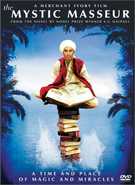
The Charge "You is a crazy man. Who you be?" The Case Ever since the early 1990s with their productions of Howard's End and The Remains of the Day, it's been an uphill battle for Merchant-Ivory. It's hard to find one of their subsequent films worth recommending whole-heartedly. Their penultimate effort—The Golden Bowl—despite a pleasing look, fine music, and a good acting turn from Uma Thurman, lacked a plot that really made us care about the characters. It also failed to suspend our disbelief concerning the artificiality of life in the settings depicted. Now, they offer us The Mystic Masseur, based on the novel by Nobel Prize winner V.S. Naipaul. This time the directing reins are taken up by Ismail Merchant, who normally produces while James Ivory directs. Ivory does not appear to have been involved in the film at all. The story is set in the Indian community in mid-20th century Trinidad and concerns an aspiring young writer named Ganesh. After his initial book fails to sell very well, and seeking a source of money to tide him and his wife Leela over until his writing becomes more lucrative, he turns to a talent that he seems to have for curing physical and mental ailments. His abilities in this regard soon bring him much local fame and he comes to national attention as well. The government tries to capitalize on his popularity by offering him an important post, but after he fails to resolve a labour dispute, the government basically casts him aside. If the above description prompts the question "and then what?," therein lies much of this film's problem. Nothing really happens after that. The film just deflates slowly to a conclusion with no real resolution of anything. A framing subplot has Ganesh visiting Oxford where the first person he healed is now a student, but the only real outcome of that seems to be the presentation of some pleasant vistas of the university campus and surrounding town. The result is that the capital built up by the film's first half—the profile of the Indian community and the introduction of a number of interesting characters including the father of Ganesh's wife—is squandered with nothing to show for it in the end. V.S. Naipaul's source novel had important points to make about the difficulties faced by a close-knit community like the Indians who were little understood by the Trinidadian black majority or the British colonial rulers, but the film fails to bring them out. Nor is the film ever sure whether it wants to be a comedy or a drama. There are certainly hints of the former throughout the first half—comedies of situation and character, although they are low-key in nature. Thereafter, the film seems increasingly serious until we are not sure how to react to some of the situations shown. The only immediately recognizable names in the cast are James Fox, who's wasted in a minor role, and Om Puri, who really enjoys himself playing Ramlogan, Ganesh's father-in-law. Aasif Mandvi plays Ganesh convincingly as a young man, but is less persuasive as the older Ganesh. Ayeshar Dharker is delightful as Leela. Columbia has delivered a very pleasing 1.85:1 widescreen transfer. The source material is in good shape and the resulting image is bright, clean and colourful. Black levels are deep and shadow detail is very good. Edge effects are minor. The Dolby Digital surround track is also pleasing. Most of the film is dialogue intensive and that is delivered clearly. A few surround effects are evident. The disc lacks any subtitles, which is unusual for Columbia. Supplements are limited to trailers for Lagaan: Once Upon a Time in India and Secret Ballot. Despite a good beginning to this film and a nice-looking transfer, I can't offer an endorsement of this DVD. The film's second half is too much of a let-down. Merchant-Ivory aficionados, however, may wish to take a flyer on a rental in order to judge for themselves. Review content copyright © 2003 Barrie Maxwell; Site layout and review format copyright © Share your thoughts on this review in the Jury Room
Similar Decisions: |

Printer Friendly Version |
||||||||||||||||