|
Reviews |
Upcoming Releases |
Discussion Boards |
Staff Dossiers & Blogs |
Studio Info |
Feedback |
All Content...
Most Popular | Best Rated | By Date | Random |
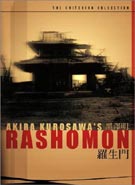
The Charge It is because men are weak that they lie—even to themselves. Opening Statement One of the properties of film that make it such a wonderful medium for storytelling is its ability to play havoc with our perception of reality. We take this property so much for granted that we rarely stop to consider what an amazing thing it is. We are inclined by our nature to take things we experience through the eye and the ear as a true representation of reality; we don't readily accept the idea that our eyes and ears might be lying to us. The fact is, of course, that our perceptions of reality deceive us all the time. Anyone with experience investigating crimes can tell you that eyewitness accounts are rarely as dependable as one might expect. In some law-enforcement circles, this phenomenon is still referred to as "the Rashomon effect." Akira Kurosawa's Rashomon was one of the first films to take full advantage of this quirk of human perception. Based on a pair of short stories by the Japanese author Ryunosuke Akutagawa, Rashomon provides fascinating insight into human perception and human nature, specifically our inability to be completely honest about ourselves, even to ourselves. Facts of the Case Three weary travelers take shelter from the pouring rain under Kyoto's dilapidated Rashomon gate. Two of them have just finished serving as witnesses in a bizarre murder trial. One of the witnesses is the Priest (Minoru Chiaki, Seven Samurai, The Idiot, Throne of Blood) who fears that what he has just witnessed will destroy his faith in humanity. He has been called to testify since he is the last one to have seen the murdered man alive. The other witness is the Woodcutter (Takashi Shimura, Seven Samurai, Ikiru, The Hidden Fortress), the man who found the body of the slain samurai. As they bemoan the evil they have seen in the courtroom, they are joined by the Commoner (Kichijiro Ueda, Seven Samurai, Ugetsu, Samurai Saga). He asks the witnesses what they are so shaken up about, and they relate the tale of the crime and the trial. What follows are four different versions of the crime. The differing accounts agree in a few basic elements, but differ widely as to the particulars. They all agree that the Man (Masayuki Mori, The Bad Sleep Well, Bushido,Ugetsu) and the Woman (Machiko Kyô, Tale of Genji, Ugetsu, Gate of Hell) were traveling through a forest. The two encountered the infamous bandit Tajomaru (Toshirô Mifune, Seven Samurai, High and Low, Yojimbo), and the Man wound up dead. As the trial progresses, we hear testimony from the Woodcutter, the Woman, Tajomaru, and the Man, who speaks via a medium. Each tells a widely different version of the incident. Each one in turn claims credit for the Man's death—including the Man himself, speaking from beyond the grave, who claims that it was a suicide committed to preserve his honor. In one version there is a rape, in one a botched attempt, and in one a seduction instead. Perhaps the men fought valiantly, or perhaps they behaved like cowards. Perhaps the Woman was virtuous, or perhaps she was the most cunning of all. An ultimate, satisfying truth eludes us. The Evidence Rashomon is the film that first brought Kurosawa to the attention of western audiences. The multiple viewpoint storytelling technique has spawned countless imitations in this country, including such varied examples as episodes of Moonlighting and Star Trek: The Next Generation, or even the structure of Courage Under Fire or Brian De Palma's wretched Snake Eyes. The legacy of Rashomon has been written about, analyzed, and discussed to death. It is mandatory watching for just about anyone who has taken even an intro-level film course, and should be mandatory watching for anyone who claims to love movies. However, what strikes me most about this film on repeated viewings is not the inventive structure or playing games with reality and perception; we've all seen enough bad Rashomon knock-offs, whether we know it or not, that it doesn't seem all that radical or original. Instead, what jumps out is the striking visual style and composition, coupled with Kurosawa's judicious use of sound and music. Donald Richie notes several times in his commentary track that Kurosawa had a great love of silent film, and sought to use his visuals in a way that sets a specific mood and tone the way a silent film would, without a reliance on dialogue or explanation. There is nothing accidental about the way Kurosawa puts together a single frame of any one of his films; he controls every element with the attention that a painter pays to his paint and brushstrokes. As a result, he is able to say more about the relationship between characters just by their placement or with a quick edit than some filmmakers are able to do with pages of dialogue. The film also benefits from the talents of the lead actor, Toshirô Mifune. Mifune's full range is on display here as it is in no other film I have seen, except possibly Seven Samurai. Mifune can be an animal one minute, a fierce woodland bandit and predator, and show almost childlike exuberance the next. As with most Japanese films, Mifune's performance will take some getting used to for most western viewers; he has a tendency to be a bit over the top by Hollywood standards. Taken in context, however, he gives a truly amazing performance. The fine folks over at Criterion put a lot of work into restoring this film. It is presented in its original aspect ratio of 1.33:1, of course in glorious black and white. The results are for the most part quite good; most scenes are nice and crisp, with good detail and shadow gradations. In the opening scenes at the Rashomon gate one can see every drop of the tremendous downpour. There are some moments when the film shows its age; even the wizards at Criterion were not able to get rid of all the scratches and nicks, and there is some very pronounced film grain in the more brightly-lit scenes. Perhaps less forgivable, there appears to be some digital shimmer/strobing/false movement in seemingly solid surfaces, but I will concede that this may just have been my old eyes making the film grain seem worse than it actually is. There are also some assorted instances of edge enhancement/haloing, and some aliasing or "jaggies" from time to time, but overall this is a very good transfer of a film that Criterion has lovingly restored. The audio is a solid presentation in Dolby Digital 1.0 Mono. It sounds about as good as one would expect from a 52-year-old Japanese film. The audio does seem a bit pinched and tinny at times, perhaps skewed a bit to the higher end of the register. This is particularly noticeable when there is music playing. Other than that, the sound comes through quite well, including the sound of the rainstorm at the opening of the film. Dialogue comes through clearly and is easy to understand, or at least it would be if I spoke Japanese. There does some to be some residual analog hiss or static under the audio most of the time, but it is minimal, especially for a film of this age. There is also a Dolby Digital 1.0 English dub available on this disc. To be fair, the audio quality of this English-language track is much cleaner and sharper than the original Japanese audio, and the voice acting is not half bad. Still, it is only for the heathens. I maintain that if you aren't smart enough to read subtitles, you ought not be watching a Kurosawa film, or any foreign film for that matter. To sum up, the audio quality is acceptable but is not up to the standards of some of Criterion's other Kurosawa discs. Criterion has been a bit stingy with the extra features on some of their releases of late, but Rashomon is a pleasant exception. Kicking things off is a video introduction by Robert Altman, who talks of the influence that Rashomon has had on his work, as well as some more general points about the nature of art and perception. Altman's segment runs about six minutes and thirty seconds, and sets us up nicely for what is to follow. There is also a documentary entitled "The Camera Also Acts." It is an excerpt from a larger documentary on the life of Kurosawa's cinematographer Kazuo Miyagawa produced by Japan's NHK Television. This featurette runs about twelve minutes and gives a lot of interesting background information on the technical side of making Rashomon. There is also a theatrical trailer for the film, running just over three minutes. It is notable in that it includes several images that do not appear in the finished film. The centerpiece of the extra content is, as always, the commentary track. Criterion's Rashomon disc includes a very good one by Donald Richie, a noted historian of Japanese film and author of The Films of Akira Kurosawa. The commentary track has its own index, which allows the viewer to select specific issues or ideas that Richie discusses. Overall this is an informative track, although Richie's voice and delivery do get a bit dry at times. However, it is well worth is as Richie examines all aspects of the film, from its take on human psychology to Japanese culture and down to the technical aspects of Kurosawa's meticulous compositions, visual style, and shot selections. It's a great commentary track, definitely in the "film school on a disc" category. Rounding out the extra features, we have a fairly thick booklet that comes with this disc. Printed extras do not often qualify as special features in my book, unless of course they come from Criterion. It starts with an essay by Stephen Prince, an author who has written extensively on Kurosawa, on the making of Rashomon. We also get reprints of the original short stories by Ryunosuke Akutagawa upon which the film was based. Perhaps most important, we get the story of Rashomon in the words of the master himself: a lengthy excerpt from his book, Something Like an Autobiography dealing with the philosophical issues behind the film, as well as some of the ordeals in making it. It's a great read, and gives some needed insight into the nature of the master as well as his film. The Rebuttal Witnesses The ending of Rashomon is a point of contention among many of the people who love the film. As the witnesses finish telling their stories and the rain over the Rashomon gate clears up, there is a moment of surprise that seems intended to reaffirm Kurosawa's basic optimism and faith in human nature. The problem, or so say some critics, is that this life-affirming moment at the end seems a bit too convenient and a bit trite. More importantly, in their eyes it undermines the rest of the film. I remain undecided about the ending; it does seem a bit tacked on and a little too "Hollywood." On the other hand, it also is strangely satisfying. It makes a nice contrast to the bleak view of human nature that dominates the rest of the film. Closing Statement Rashomon is a great film by the greatest director of all time. It will require multiple viewings to fully appreciate all of the observations about human nature and human perception in this film, as well as the amazing filmmaking skills involved. The Verdict This court once again humbly acquits both the great Kurosawa and his film. Criterion is commended for a very good DVD package. We stand adjourned. Review content copyright © 2002 Erick Harper; Site layout and review format copyright © Share your thoughts on this review in the Jury Room
Similar Decisions: |

Printer Friendly Version |
||||||||||||||||||||||||||