|
Reviews |
Upcoming Releases |
Discussion Boards |
Staff Dossiers & Blogs |
Studio Info |
Feedback |
All Content...
Most Popular | Best Rated | By Date | Random |
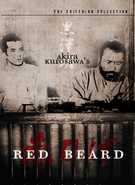
The Charge Medical science doesn't know everything. We know the symptoms and how things go. If the patient has a chance, we try to help. But that's about all. We can only fight poverty and ignorance, and cover up what we don't know.—Dr. Kyojio Niide, AKA "Red Beard" Opening Statement The concluding chapter in director Akira Kurosawa's long, fruitful collaboration with Japan's greatest actor, Toshiro Mifune, Red Beard is a moving philosophical drama about the true nature of heroism and human relationships. It is also a stunningly beautiful piece of cinema—Kurosawa's final black and white film and his last to be shot in panoramic widescreen. As the film that heralded the beginning of the decline of Kurosawa's tremendous popularity in Japan, this tender, haunting tale places a fitting period at the end of the master director's most successful era. Facts of the Case Freshly-minted medical doctor Noboru Yasumoto (Yuzo Kayama) arrives at the Koishikawa Public Clinic a perplexed young man: why has he, who trained at the Dutch medical schools of Nagasaki to become the personal physician of the Shogun, been banished to this God-forsaken backwater to tend to the wretched and impoverished? It comes as little comfort to Yasumoto that his new mentor Dr. Kyojio Niide (Toshiro Mifune), nicknamed "Red Beard" by his patients and acolytes for the auburn flecks in his bushy facial hair, is advertised as a tyrannical martinet who eats inexperienced physicians for breakfast. Indeed, it seems to Yasumoto that Niide seeks only to get his hands on the goldmine represented by Yasumoto's notes and case studies from medical school. So the young doctor rebels: he refuses to wear the clinic uniform; he disdains the common food; he runs off to the forbidden herb garden where a mysterious patient known only as "the Mantis" is housed under lock and key. Through his experiences with a series of remarkable patients, and his observation of the compassionate manner in which Niide deals with the suffering of these destitute people, Yasumoto grows to comprehend that being a doctor means more than just status and perquisites. It means learning to perceive the roots of human need, and battling against insurmountable odds to address those needs. ("If it weren't for poverty, half these people wouldn't be sick," the elder physician sagely observes.) By the end of their time together, Yasumoto has matured beyond his callow, self-important youth to become a servant of humankind…to become, in the end, like Red Beard. The Evidence To most American filmgoers, the names Kurosawa and Mifune in combination mean one thing: The Seven Samurai. Those who sit down and pop Red Beard into their DVD players expecting flashing swords and splendidly choreographed battle sequences will be largely disappointed. There is one fight scene in Red Beard, and it's terrific—Mifune as Niide liberates a 12-year-old girl from enforced servitude in a brothel by single-handedly wiping out a gang of thugs determined to keep the girl imprisoned—but it is incidental to the plot and inserted largely for comic relief. However, it should be noted that Red Beard is a film about samurai warriors: the world-weary veteran Red Beard and his immature apprentice Yasumoto. True, these men wear clinic uniforms, not battle armor, and the tools of their trade are herbs, medicines and medical implements instead of katanas. But at their core they are samurai, bound by an unspoken code of bushido, sacrificing themselves in order to champion those less capable and powerful than they. The physicians' dedication to their patients is little different than the dedication of the seven samurai, setting their own lives on the line to protect a humble village from plunder by evil men. Seen in this light, Red Beard brings the viewer to the striking realization that anyone—you and I included—can be samurai. We think not, for we believe we lack the strength of warriors. But at the beginning of this film, Yasumoto hardly seems a likely candidate to be a great doctor. He is egotistical, selfish, petulant, and vain. It takes the influence and example of Niide to release the untapped potential for honor in the younger man. Once that potential is set free from its shackles of arrogant pride, it blossoms into what it always had been capable of becoming: the soul of a healer. Not so different, really, from a tenderfoot fighter puffed up with his own raw skill gradually maturing into the humble, disciplined swordsman his master has long since become. Using the setting of a public clinic in the 19th century, Kurosawa has much to say about the state of medicine and government in the present day. Niide knows from cruel experience that government bureaucracy is not the answer to the problems of the poor. The government—represented in one scene in Red Beard by a grotesquely obese overlord suffering from constipation due to his rich, excessive diet—cares only for those who can enrich it and sustain its power and position. Since the poor can do neither of these, government has no vested interest in them and therefore will never adequately provide for their welfare. Although Red Beard sees and grudgingly accepts this, he refuses to allow his resignation to reality to prevent him from doing what precious little his talents and insights can accomplish. Red Beard stands symbolically astride two worlds of practitioners: Eastern tradition, which had little regard for anatomical studies and surgical intervention in favor of naturalistic/spiritual approaches, and Western medicine, whose focus is entirely on physical symptomology and which rarely considers spiritual/emotional factors. Niide embraces the scholarship of the Dutch medical schools—he is eager to learn from Yasumoto's journals, and utilizes modern surgical techniques and pharmacology—but he never loses sight of the fact that people are more than the mere sum of their body parts. By taking this holistic approach, Red Beard develops an understanding of the lives and bodies of his patients at levels no physician wedded exclusively to either Eastern or Western medicine could attain. For his part, Yasumoto has only begun to climb the rocky cliffside of life that his mentor has ascended before him. The nymphomanical madwoman called "the Mantis" too easily charms him because he sees only her surface—a beautiful woman scarred by the cruelties of childhood abuse. Red Beard is not seduced by the Mantis, and therefore is able to rescue Yasumoto from her murderous clutches just in the nick of time. He rightly perceives that—her tragic experiences aside—she has chosen the path of monsterhood of her own will (others have been abused, but they have not become killers as a result). Likewise, Yasumoto is crushed by the sad biography of noble Sahachi, who despite his own grave illness has labored himself literally to death providing the material necessities of his fellow patients. Red Beard, conversely, simply grants Sahachi his quiet dignity, not fawning over him as the patients do, but understanding Sahachi to be the mirror image of the Mantis: a person dealt a bitter hand by life (Sahachi's wife, whom he had believed dead, in fact had run off with another man) but who used his misfortune as impetus for good rather than evil. It is the story of Sahachi and his saintliness that propels Yasumoto forward into manhood in the second half of the film. Kurosawa presents his episodic tale with unmatched visual grace. The power of the director's vision derives in part from his impeccable use of widescreen framing (it was shot, as presented here, in a 2.35:1 aspect ratio). It's impossible to imagine how this film could be presented in a square-screen, pan-and-scan edit, given that Kurosawa uses every inch of his panorama in every shot. He was at this point in his career also a master of camera motion—he crafts several amazing track-borne dolly shots that must be seen to be appreciated. Ironically, Red Beard begins Kurosawa's transition toward more still camera positioning, a sharp break from his earlier style. He uses telephoto lenses throughout the film to foreshorten perspective and distort special distance between his characters, often cutting to a 90-degree alternate angle that suddenly, startlingly, changes the stage from what we believed it to be—characters who appeared close together from a straight-on perspective through the telephoto become dramatically distant when viewed from the side. It's a striking technique, and wonderfully implemented. Red Beard also sees Kurosawa moving toward longer unedited takes, giving the film an almost "live theater" feel. Yasumoto's encounter with the Mantis, for example, is shot in a single take over five minutes in length. (Try to envision a modern American director, trained in the leapfrog style of music video, using a five-minute unbroken shot.) But because his camera never blinks, Kurosawa's building of emotional tension is relentless and inescapable—Hitchcock used a similar technique to less successful effect in Rope—and when the cut finally comes, we feel as if we have been ambushed right along with Yasumoto. Kurosawa draws moving performances from his cast, rarely treading over the line into melodrama. Mifune is at the height of his magnificence here—you can't look away from him when he is on screen, and his ability to convey a torrent of emotions without speaking a word is unparalled. Yuzo Kayama is also thoroughly believable as the neophyte Yasumoto. Tsutomu Yamazaki yields a touching gravity to his scenes as the tragic yet heroic Sahachi. Even the smallest roles are lovingly and deftly portrayed. Criterion once again excels in presenting this masterwork to a new audience on DVD. The digitally restored anamorphic transfer shows lush contrasts and surprisingly few major print flaws. The grayscale is perfectly balanced from shade to shade in every scene, whether dark or light. The remastered stereo soundtrack is also a treasure—every sonic element, from the roar of a typhoon wind to the gentle tinkling of wind chimes, is pristinely preserved. Criterion merits yet more commendation for another outstanding transfer. Several of the major studios should take lessons from the Criterion folks in how to maximize the power of the DVD medium. Coupled with this fine restoration is an exemplary audio commentary by Kurosawa scholar Stephen Prince. Although Prince could use some vocal presentation coaching—he has no idea how to use inflection, resonance or pitch, and half the time he sounds like he's huffing helium—his text is marvelously detailed and in-depth, and he clearly loves his subject. Viewers should receive college credit after absorbing this commentary; it's at that lofty a level of detail. The keep case liner notes by Film historian Donald Richie complement Prince's remarks nicely. The remaining extra is the film's original Japanese trailer. The Rebuttal Witnesses As much as I appreciate the contributions to this DVD package of scholars Prince and Richie, just once I'd like to hear about Kurosawa from a Japanese perspective. Perhaps for a future release of one of Kurosawa's films, Criterion—or another production house—should consider an English translation either of liner notes or a text-based commentary by a Japanese cinema historian, to shed some light on the director from within his own heritage and culture. Just a thought. Closing Statement A phenomenal work of cinematic art. My only criticism, and it's an extremely minor one, is that Kurosawa on occasion lingers ever-so-slightly too long over some of his vignettes. But the glorious clarity of his vision, coupled with the heartbreaking performances by his cast, compel us to forgive the great director any sins of tedium. This is a film that deserves an honored place alongside Kurosawa's better known (in America, at least) works. Red Beard should be required study for every student in America's medical schools. It's a thought-provoking gem. The Verdict Red Beard is recognized from the bench as an amicus curiae in the matters of medical ethics, personal sacrifice, and the human condition. Criterion is excused with the thanks of the Court. The Judge will retire to chambers to review this monumental film again and again, and reflect upon its beauty and nobility. We're adjourned. Review content copyright © 2002 Michael Rankins; Site layout and review format copyright © Share your thoughts on this review in the Jury Room
Similar Decisions: |

Printer Friendly Version |
||||||||||||||||||||||||||