|
Reviews |
Upcoming Releases |
Discussion Boards |
Staff Dossiers & Blogs |
Studio Info |
Feedback |
All Content...
Most Popular | Best Rated | By Date | Random |
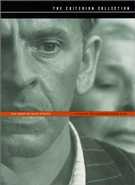
The Charge A single death is a tragedy; a million deaths is statistics.—Josef Stalin Opening Statement This amazing Czechoslovak film brings the horrors of the World War II years and the Holocaust and makes them understandable in the only way possible; as individual moral dilemmas faced by ordinary people. Facts of the Case Antonin "Tono" Brtko (Jozef Kroner) is a hapless peasant living in Nazi-aligned Slovakia in 1942. He eschews all involvement with Fascist politics, and struggles to make a living as a carpenter. He regularly shuns and insults his brother-in-law Marcus Kolkotsky (Frantisek Zvarík), the local Fascist poobah. Thus it comes a surprise to Tono when his brother-in-law appoints him the Aryan manager or "Arisator" of Jewish business in the village. All of the Jews are being forced to turn their businesses over to Aryan control. Tono finds that he has been chosen to take over a small shop owned by Rozalie Lautmann (Ida Kaminska), who sells buttons and various sewing necessities. When he arrives at the shop, he meets Mrs. Lautmann, who is quite old, with failing vision and hearing. She doesn't understand his court order, doesn't even understand that a war is going on. Through one miscommunication and another she takes Tono on as an assistant to help her run the shop. He soon learns why Kolkotsky arranged for him to take over the shop; there is no inventory, and no money. Tono has clearly been played for a fool, and is ready to turn the shop back over to the authorities when members of the Jewish community approach him. They have been quietly supporting Mrs. Lautmann for years, and are willing to pay Tono a nice monthly salary as well if he will just keep quiet. Tono has nothing against the Jews, and has been friendly with a number of them for many years, so he agrees. He is not above getting paid for not doing much of anything, and besides, it's as good an excuse as any to get away from home and his overbearing wife. As he spends his time working in the shop for Mrs. Lautmann and doing odd jobs for her, something approaching friendship or even affection grows between them. But, it is clear that their arrangement can't last forever. As a huge Fascist monument on the town square grows towards completion, it becomes clear that Tono will face the moral dilemma of his life. Will he turn Mrs. Lautmann over to the authorities who are expelling the Jews, or will he try to protect her and face punishment as a "Jew-lover"? The Evidence The Shop on Main Street (Obchod Na Korze) is made up of two separate halves that feel like completely different films, yet would lose much of their impact if separated. The first half of the film seems to be a light comedy, following the hapless Tono and his ever-faithful dog Essenc on their whimsical wanderings around the village. There are some warmly funny moments as the relationship between Tono and Mrs. Lautmann deepens. Still, we know it won't last. Throughout even these happier times there are signs of what is to come. The film is dominated throughout by the looming shape of the great Fascist pyramid being constructed on the town square, which Tono pointedly refers to as a "Tower of Babel." Its progress is ominous, and we know that once it is completed that all hell will break loose. As the tower rises, the film enters its second, much less funny phase. The closer the monument gets to completion, the more evidence we see of Fascist repression, building in a crescendo that culminates in the deportation of the Jews. The stark differences between the humorous and serious elements of the film create a dichotomy that reflects the differing perceptions of Jew and Gentile of life under the Slovakian Fascists. It is a dichotomy that is reflected in several elements of the film, and in the society and characters it depicts. From the opening frames of film director Ján Kadár uses subtle juxtapositions to make his point about the two societies depicted. Our first look at the village is literally a bird's-eye view, contrasting the relatively joyful outside world with a group of men trudging in a slow circle in a prison exercise yard. Is this a statement about the visible non-Jewish society versus the more hidden, forgotten Jewish society, forever doomed to bear the burdens of their long, difficult history? We see the village residents strolling around the town square on a brilliant afternoon, seeming to be cheerful. On second glance, are they really happy to be there, or is it forced? Are their strollings around the square voluntary, or are they as regimented, as compulsory in their own way as the circlings of the men in prison? Is the village what it appears, a happy and carefree place where polka bands play and artists relax and paint in the park, or is that freedom just an illusion that suits certain members of the community? Does the village lose its innocence, or did it not have any to begin with? All that aside, this is really Tono Brtko's story. One of the hardest things to understand in modern history has been the complicity of ordinary, average people in the horrors of the Holocaust. Tono for us is like the proverbial frog in the kettle of boiling water, not realizing the predicament he is in until it is too late. At the same time, we need to question his moral center. Here is a man who has casually decried the Fascists and wanted nothing to do with them. However, we find out that this is not a matter of principle, but a personal resentment of his brother-in-law. Tono has no problem accepting the shop that is given to him; he only objects when he finds that it is worthless. He forms a bond of sorts with Mrs. Lautmann; however, he is willing to cast that aside when he feels that it might bring him trouble. Tono is an all-too-real example of how normal, everyday people can be caught up in injustice if we are not vigilant. His downfall comes not from any love of the Fascists, but from his indifference and ignorance. As the old saying goes, the only thing necessary for evil to succeed is for good people to do nothing. The character of Tono Brtko is like this proverb written in flesh. The Shop on Main Street benefits from two outstanding acting performances from the leads. Jozef Kroner brings Tono Brtko to life, first as an inept, almost Chaplinesque figure of misfortune, and later as a man driven by fear, willing to give up another to save his own skin. Kroner understands the basic absurdity of Tono's situation: the lazy, uncooperative man given a shop to run by the Fascists; the shop that is supposed to be a goldmine but is completely worthless; the "Arisator" on the payroll of the Jewish community and ordered around by the woman whose shop he is supposed to be commandeering. At the same time, he does a great job of showing us the turmoil within Tono Brtko, his frustrations, fears, and ultimately his horror at the way events unfold. The counterpoint to all this is Ida Kaminska as Mrs. Lautmann, the sweet, oblivious old lady who thinks she is doing Tono a favor by giving him a job. Kaminska, like Kroner, understands the basic absurdities of her character's position. She too makes a startling transition when she is suddenly awakened to reality; her transformation is visible as realization spreads across her face and she breathes a single, hated word: pogrom. The direction by Ján Kadár is masterful without ever drawing attention to itself. He places his camera intimately but unobtrusively, so that we feel like we are sitting at a table or standing in a button shop with these people, an unseen additional participant. There are a few less-than-subtle stylistic flourishes, such as Tono looking at distorted reflections of himself or peering through distorting glass in times of peril or indecision. However, these are used only sparingly, and for the most part everything is done very skillfully and subtly. On the other hand, one of the less subtle moments is also one of the most effective, late in the film as Tono looks around Mrs. Lautmann's shop and apartment in horror, focusing on the mundane details of life that surround him. This shot gives a true feeling of losing control, of being overwhelmed by surroundings and circumstances. Kadár makes good use of music as well, combining cheerful waltzes and polkas with more folksy, rustic sounds of Slovak fiddle music. This music has a strange quality, and is able to seem cheerful or ominous as the film requires without actually changing a thing musically. At times it has a haunting feel, almost like the harsh strings we remember so well from the shower scene in Psycho. Kadár uses the music skillfully as he tells his story, and it becomes an integral part of the narrative. The Shop on Main Street was made in Czechoslovakia in 1965, and won the Oscar for Best Foreign Film for that year. Now, you may ask, why on earth would a Communist government allow such a film to be made, a film that asks moral questions of a totalitarian regime? As it turns out, the film was made during a period of relative freedom under the Czechoslovakian Communist regime. Czechoslovak films picked up Oscars for Best Foreign Films in both 1965 and 1966. However, the climate of freedom and expression that made The Shop on Main Street possible would not last long. Such permissiveness made Czechoslovakia's Soviet overlords nervous, and so they invaded the country in 1968 to crush the "Prague Spring" which had been flourishing and "restore order." Not surprisingly, the Soviet regime banned this film once the country was brought into line. The Shop on Main Street comes to us on DVD from the Criterion Collection, naturally. It is presented full-frame, in its original aspect ratio of 1.33:1. It is for the most part a very good transfer, with sharp contrasts and excellent details. There is some grain, as is to be expected with a film of this age. There is also some digital aliasing in curved lines or surfaces, but it is not pronounced. I saw some instances of digital false movement or crawling, but nothing severe. I found no instances of edge enhancement. Overall, this is Criterion's usual meticulous job of presentation. The audio is presented in Dolby Digital 1.0 Mono, in its original Czech/Slovak. It is surprisingly good, with dialogue coming through clearly. Background sounds such as construction noises, birds singing, or a band playing in the distance were nicely blended and very clear. The musical score comes through nicely as well, although it does seem a bit muffled or pinched in the higher registers at times. The Rebuttal Witnesses While I have no complaints about the film itself, I do need to take Criterion to task for a few issues with the DVD. First, while the picture is marvelously clean and sharp through most of the film, portions of the last reel look noticeably worse than the rest of the print. Given Criterion's record of meticulous attention to transfers, it is probably the case that this was the best that could be done with the source materials available. Second, and much more serious, is the lack of any significant extra content. There is a nice but short essay about the film by director Ján Kadár as part of the liner notes in the DVD case, and there is a trailer for the US theatrical release. The essay is quite informative, but I would have liked to see more supplemental material. Criterion is a master at providing unique supplements to help us as an audience understand difficult films. This is a difficult film to fully grasp, and would have benefited much from a scholarly commentary track or at the least an interview featurette. If nothing else, at least some background information on the Czech New Wave of the mid-1960s would have been helpful. Closing Statement Films like The House on Main Street, with the opportunities and lessons they provide, are the reason I became a film critic in the first place. It is a challenging and frightening film. It is challenging because it contains so many layers and possible meanings, and it is left to us as the audience to decipher them all. Frightening, because in the character of Tono Brtko we see how easily the average person can be drawn into evil without intentionally setting out to do evil. I recommend it highly. The Verdict I find both the film and Criterion to be not guilty, although Criterion appears not to be living up to their reputation for quality extra supplements. If they need people to provide insights, say for commentary tracks, I know where they could find 8-12 people willing to work cheap; contact editor Mike Jackson for our addresses. We stand adjourned. Review content copyright © 2001 Erick Harper; Site layout and review format copyright © Share your thoughts on this review in the Jury Room
Similar Decisions: |

Printer Friendly Version |
||||||||||||||||||||||||||