|
Reviews |
Upcoming Releases |
Discussion Boards |
Staff Dossiers & Blogs |
Studio Info |
Feedback |
All Content...
Most Popular | Best Rated | By Date | Random |
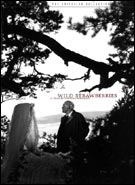
The Charge "You have been accused of guilt…I'll make a note that you haven't understood the charge."—Teacher (Gunnar Sjöberg) to Isak Borg, in a dream Opening Statement Isak Borg (Victor Sjöström), professor of medicine, has withdrawn from the world of other people. Sick of evaluating his failed relationships, he has thrown himself into science. Even his name in Swedish suggests he is an iceberg. At 78, he has comfortably settled into life as "an old pedant." As he prepares for a trip across Sweden to accept an honorary degree for his professional—if not personal—accomplishments, he is plagued by dreams: a deserted street where the clocks do not keep time; a hearse that squeaks like a crying child and tips open to spill its coffin. Borg knows that death is reaching for him. The Evidence Bergmanesque. Film scholars use this word like literary scholars refer to Kafka, as if their artistic worlds operate under unique sets of rules sufficiently alien enough to warrant a single adjective that might sum up them up. Few cinema directors have earned such distinction. We might speak of a film as being "Bunuelian" or "Wellesian" (or its nosy neighbor, "Altmanesque") or even, on a bad day, "Spielbergian." But those terms seem slightly awkward, as if the metaphor does not quite reach all the way. But Bergmanesque: that one we have gotten used to. Bergman's camera chronicles the subtle psychological traumas we endure in a world that God has abandoned. We are haunted by religious symbols, by the possibility of evil, by one another. And we are haunted, most of all, by ourselves. Eager to get to Lund by the end of the day, Isak Borg seems frustrated with his feisty housekeeper Agda (Folke Sundquist), who refuses to travel with him as he wants, and his daughter-in-law Marianne (Ingrid Thulin), who insists on coming along instead. At first, Borg and Marianne seem off on a traditional road trip in a 1937 Packard that seems to expand to accommodate the new companions gathered along the way. But this is also a journey through Borg's past, through "the even clearer images of memory that appeared before my eyes with the strength of a true stream of events." These are not pleasant memories. As Borg finds the titular wild strawberries growing outside his childhood home, he travels back to when his cousin and true love Sara (Bibi Andersson) crudely seduced his brother. Inside, the family sits down to dinner. The scene is pure theatre, carefully lit and staged with a hint of artifice. This is Borg's recollection of his bittersweet youth: his sanctimonious family, clad all in white, dominated by an imperious matriarch, verging on near chaos. And in the present, all along the route to Lund, Borg encounters characters who suggest his own path in life. A contemporary Sara (also Bibi Andersson) teases her two lovers. A bickering married couple (Gunnar Sjöberg and Gunnel Broström) psychologically preys on one another. "She has her hysteria," the husband snaps. "And I have my Catholicism." Later, Borg meets an idealistic fan (Max Von Sydow) who offers to name his child after the increasingly melancholic professor. Ironically, Borg's relationship with his own son is strained. He ruthlessly extorts loan payments from Evald (Gunnar Björnstrand) and has turned his son into a cynical man whose bitterness seems a mirror of the father. Swedish director Ingmar Bergman began Wild Strawberries intending to explore his own relationship with his father. But Bergman quickly found sympathy for the plight of an old man who made too many wrong choices along his journey and needed one last opportunity to reexamine his life. At the heart of Wild Strawberries is Victor Sjöström's performance as Isak Borg. Coaxed out of retirement from a successful career as an actor and director (American audiences might know him best for the silent classics He Who Gets Slapped and The Wind), Sjöström conveys all the weight of a man at the end of his life, suddenly unsure about everything he had blind confidence in for so many years. For all of Borg's weaknesses, it is impossible not to sympathize with this failed and failing man whose worldly achievements have masked an egotistical martyr complex that has pushed everyone in his life into a corner. Even his wife (Gertrud Fridh), who accuses him of incompetence in a brutal dream sequence that marks the turning point for Borg, makes it clear that her adultery was driven by frustration with his constant icy condescension. This is the bleakest moment of a film that seems to get darker with each passing scene, a film where we have become slowly aware of youth's blind faith and old age's realization of inevitable death. And yet, Borg still has a chance, as the judgmental teacher in his dream tells him, "A doctor's first duty is to ask for forgiveness." In this way, Borg, and Bergman himself, can be purged. Redemption in Bergman's films comes not through God or the law, but through the connection, when possible, to others. There is even in the most desperate moments the promise of the future, if the characters can escape the recapitulation of the past. Each new life has a chance to break the cycle. In some Bergman films, the characters find that potential. In other Bergman films, they do not. You can learn as much as you might ever want to know about Bergman's life and work from Jörn Donner's 1998 television interview entitled, appropriately, "Ingmar Bergman on Life and Work." This 90-minute program traces Bergman's childhood and career in film and theater in a reverential manner, interspersed with Bergman's musings on a variety of topics. For example Bergman on self-identity: "I reacted to [my] upbringing with lies and dissimulation," he says of his parents' disapproval, so skillfully chronicled in Fanny and Alexander. He chats about his busy career (he cannot even remember when his children were born), Swedish politics, how he controls his artistic "demons," and of course, death, especially the traumatic passing of his last wife Ingrid. The documentary is rather slow moving and consists mostly of close-ups of Bergman talking for long periods of time. But it should prove enlightening to film scholars, if not the general public. But then why would the average moviegoer be cuddling up to Ingmar Bergman? Ultimately, what emerges from this interview is a sense that the elder statesman of Swedish cinema echoes his own youthful creation of Isak Borg: ego and regret and stubbornness all wrapped up in a restless package. Criterion's release of Wild Strawberries has been restored admirably, looking and sounding sharper than I remember it from my college days, when the existential trauma of a Bergman film was considered a fun date night at our campus film series. While its predecessor, The Seventh Seal made Bergman an international celebrity, it is this film that gave the term "Bergmanesque" its shape. Wild Strawberries is a reflection of Bergman's anguish over his personal relationships, particularly with his parents. Even the dream sequences are based on Bergman's own dreams. In a film that seems so stubbornly personal, film scholar Peter Cowie turns in a solid commentary track that points out the connections to the director's own life. Bergman viewed his own father as cold and domineering, and as Cowie theorizes, Wild Strawberries is an attempt to "exorcise" the demonic presence of his father. Curiously, while Borg's mother in the film is portrayed as rather sinister, Bergman actually had a good relationship with his own mother. In any case, Cowie gets the job done in clear and straightforward fashion, although one might long for some slightly more adventurous analysis. Closing Statement Indeed, as strong and dramatic as Wild Strawberries is by itself, it also never seems quite as adventurous in its imagery or themes as some of Bergman's more vivid films, like The Seventh Seal, Persona, Cries and Whispers, or…well, you get the point. It is hard to say where to put it in the canon of Bergman's work: either as the least of his major films, or the best of his minor films. But that does not diminish its status as classically Bergmanesque. For those interested in introducing themselves to Bergman's work for the first time, you might want to start with one of his more famous films. For those already familiar with his films, Wild Strawberries will draw you into the mind of the man himself in a way no biography could. This film will deepen your appreciation of Bergman the filmmaker, even if you find Bergman the man leaves you uneasy. Both his films and his life are disquieting, even in their final sense of contentment. Bergmanesque, shall we say? Perhaps Bergman would want it that way. The Verdict Isak Borg has undergone his trial and is therefore not subject to judgment by this court. Criterion and Ingmar Bergman are released with the court's blessing. Review content copyright © 2002 Mike Pinsky; Site layout and review format copyright © Share your thoughts on this review in the Jury Room
Similar Decisions: |

|
||||||||||||||||||||||||||